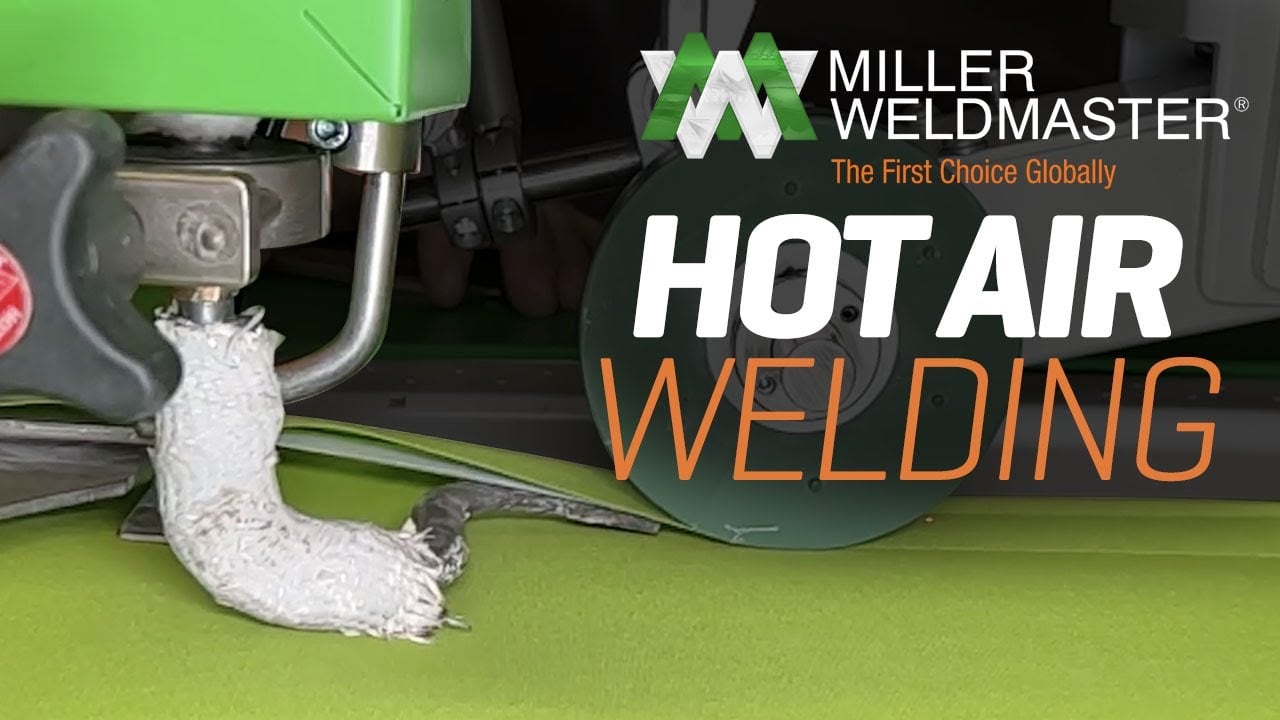
Hot air welding joins thermoplastic industrial fabrics and films with precise heat, speed, and pressure. Heated air between 700°F and 1,350°F melts the surfaces of two layers, and pressure rollers fuse them into one airtight, watertight seam that holds up for the life of the product. It is one of the most versatile ways to join fabrics, and Miller Weldmaster builds industrial hot air welding technology for everything from inflatables to roofing membranes.
This guide explains how hot air welding works, which materials and seams it handles, its benefits over sewing, where it is used, and how to choose the right hot air welder for your production.
In diesem Leitfaden:
- How does hot air welding work?
- What materials can be hot air welded?
- Benefits of hot air welding
- What is hot air welding used for?
- Quality and durability
- Hot air vs. hot wedge vs. RF welding
- How to choose a hot air welder
- Häufig gestellte Fragen
How Does Hot Air Welding Work?
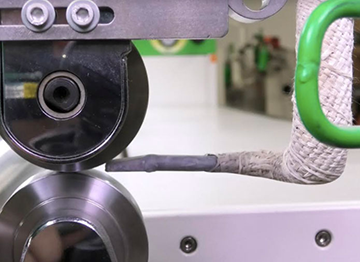
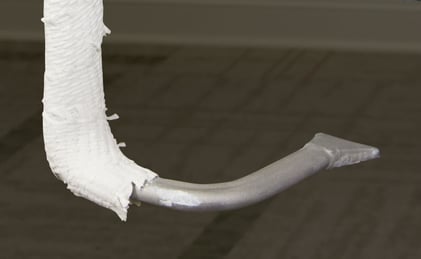
Hot air welding heats the material from the outside. A heater blows air through a nozzle between the two layers being joined, melting their facing surfaces. Pressure rollers then press the layers together, and the softened surfaces fuse into a single seam as they cool.
- Heat: The heater raises the air to between 700°F and 1,350°F, depending on the material and welding speed.
- Melt: The nozzle directs hot air between the overlapping layers, melting the surfaces that will be joined.
- Press: Rollers apply pressure immediately behind the nozzle, bonding the melted surfaces together.
- Cool: The seam cools and solidifies into a permanent, airtight, and watertight weld.
Getting the right combination of heat, speed, and pressure is what produces a complete, consistent weld. Operators can start and stop throughout the process to guide the fabric around curves and turns, and change the weld width to suit the product, fabric, and seam.
What Materials Can Be Hot Air Welded?
Hot air welding works on a wide range of thermoplastic-coated materials, including:
- PVC-beschichtete Stoffe
- Polyurethane (PU)-coated fabrics
- Polyethylen (PE) und Polypropylen (PP)
- Thermoplastic-coated synthetics and nylon
- Double-wall and drop-stitch fabrics
PVC-coated fabric is the most common choice for tarps, banners, and covers—see our PVC welding machines for those applications.
Unlike radio frequency welding, hot air also welds non-polar plastics—learn more about polyethylene welding for geomembranes, liners, and ag covers.
Seam Types
Industrial hot air welders can produce many seam configurations, and some machines weld multiple seam types at the same time using multiple heat systems:
- Stumpfnähte
- Hems
- Hems with pockets
- Keder
- Überlappende Nähte
- Gurtband-Verstärkungen
Vorteile des Heißluftschweißens
Manufacturers use industrial hot air welders to replace hand sewing, speed up production, and build stronger products. Key benefits include:
- Stronger, tear-proof seams: Welding fuses the layers instead of stitching through them. With traditional sewing, the fabric fails before a welded hot air seam, and welded seams are watertight and airtight.
- Faster production: Hot air welders work far faster than hand stitching, and machines can store operator settings so production starts sooner. One Miller Weldmaster customer reported that their welder saved three days' worth of work.
- Lower cost: Welding uses less material than sewing, and hot air welders are available with power requirements from 208 to 440 V to match your facility.
- Unique shapes without tooling: Operators can create curves and complex, three-dimensional products such as inflatables and rafts without special tooling or dies.
- Long, continuous panels: Hot air welders create long seams without tooling and can start and stop often, which makes it easier to join multiple sheets into large panels.
- Multi-layer strength: Welding multiple layers together adds stability, strength, and longevity.
- Tear repair: Hot air welders can also be used to fix tears, saving the time and cost of rework.
- Consistent quality: The right combination of heat, speed, and pressure produces consistent welds that reduce rework and keep deliveries on schedule.
What Is Hot Air Welding Used For?
Hot air welding streamlines production for large products with curves and turns, as well as long, straight seams. Common products include:
- Inflatable structures, jump houses, and white water rafts—see our inflatable product welding solutions
- Tarps, tarpaulins, and large paneled products, made on our tarp welding machines
- Schilder und Werbetafeln
- Tents, shelters, and structures
- Markisen
- Covers and industrial curtain walls
- Packaging and bags
- Beutel zum Auffangen von Flüssigkeiten
- Airplane escape chutes
Qualität und Langlebigkeit
Modern hot air welding systems are built for precision and consistency:
- Temperature, speed, and nozzle control: Enhanced temperature control, automated speed adjustments, and refined nozzle designs produce more consistent, high-quality welds.
- Material integrity: Calibrated heat and pressure manage thermal stress, reducing the risk of warping or weakening the material so it keeps its strength and appearance after welding.
- Environmental resistance: Welded seams resist water, extreme temperatures, and abrasion, which makes them ideal for outdoor, construction, and marine products.
- Monitoring and automation: Automated controls and monitoring reproduce high-quality welds with minimal operator intervention.
Hot Air vs. Hot Wedge vs. RF Welding
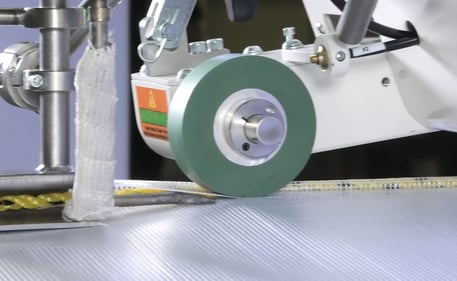
- Hot air welding heats the surfaces with hot air from a nozzle. It is the most versatile of the three, handling curves, flexible fabrics, and a wide range of thermoplastics, including PE and PP.
- Hot wedge welding uses a heated metal wedge between the layers instead of air. It works well on thick or coated materials and long, straight seams.
- Radio frequency (RF) welding heats polar plastics such as PVC and PU from the inside with electromagnetic energy. It excels at airtight seams and high-volume production but does not weld PE or PP.
For a closer look, compare hot wedge and hot air welding side by side.
Weighing radio frequency instead? Read our hot air vs. RF welding comparison.
Auswahl eines Heißluftschweißgeräts
No two products or manufacturing processes are the same, so the right equipment depends on what you make. Types of hot air welding technology to consider include:
- Versatile hot air welder: Uses hot air and hot wedge welding technologies with an unlimited array of seam types.
- Keder welder: Built to weld keder as fast as possible through automation.
- Flexible hot air welder: A hot air or hot wedge welding solution with an unlimited array of seam types and extended fabric handling support.
- Hot air curve welder: Designed to weld curves and unique shapes for inflatables, tanks, bladders, and more.
- Hot air hand tool: A high-powered handheld tool for increased membrane adhesion.
- Hot air roofing welder: Welds long, straight, consistent seams on roofing membranes.
To narrow your options, ask:
- What types of thermoplastic materials will I weld?
- Könnte ich von einer automatisierten Lösung profitieren?
- Brauche ich mehr als eine Art von Schweißtechnik?
- Do my products have many curves, or long, straight seams?
- How many different products do I need to weld, and do they have similar characteristics?
Our hot air welding machine buyer's guide walks through features and machine types in more detail.
Once your welder is running, regular hot air welder maintenance keeps seams consistent and extends machine life.
Not sure which technology fits? Talk to a Miller Weldmaster expert about the best heat system for your application.